High-volume surgical care
Major Chinese public hospitals treat large orthopaedic populations. We shortlist a relevant team for the specific hip or knee case, then obtain provider review before travel.
Plan the hospital, written costs, supervised rehabilitation and return-home handover around a provider-approved total hip or total knee replacement.
* MediConnex coordinates the pathway; clinical decisions remain with the hospital.
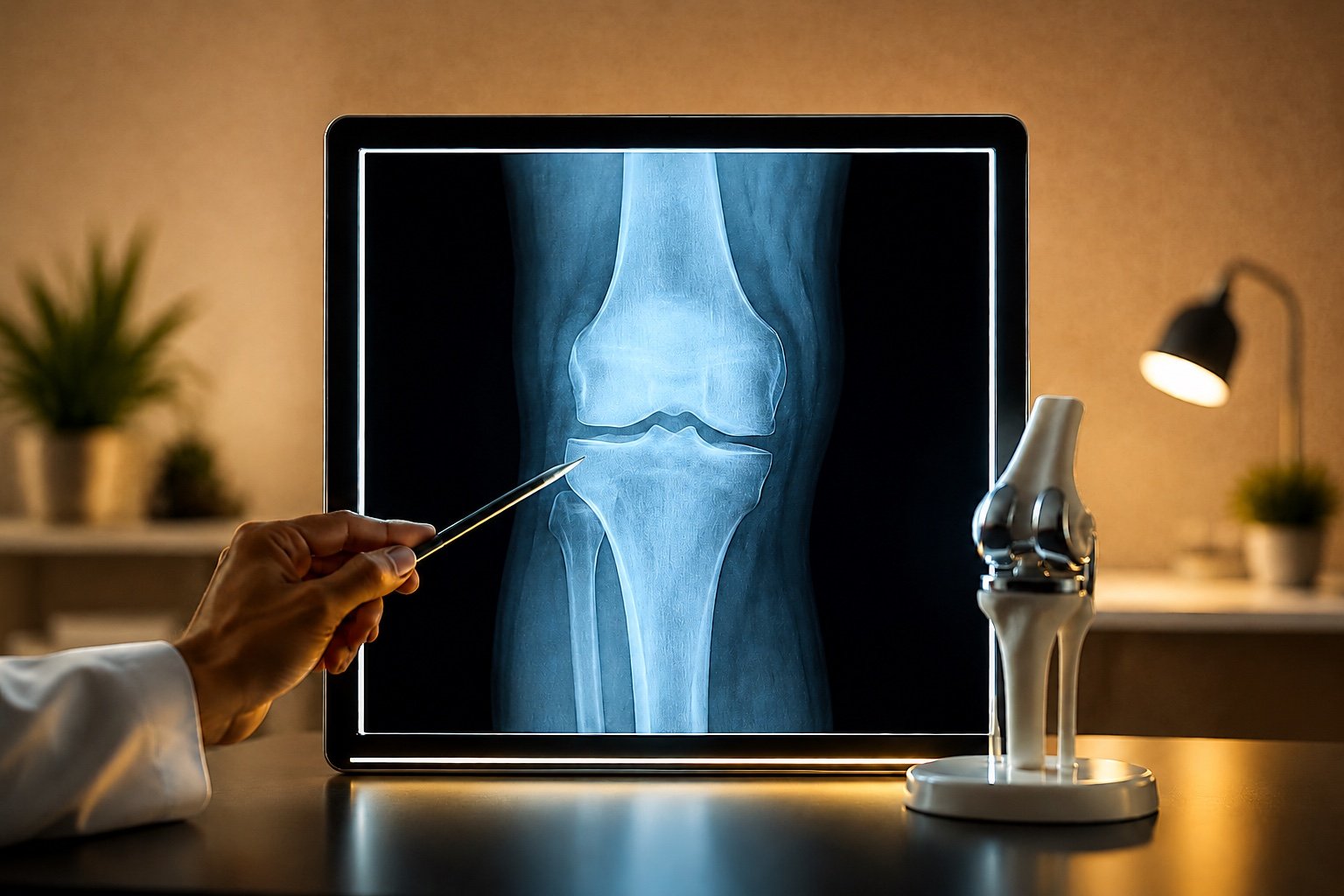
Lower implant costs are only useful when the surgery, hospital recovery and rehabilitation still form one clinically coherent route.
Major Chinese public hospitals treat large orthopaedic populations. We shortlist a relevant team for the specific hip or knee case, then obtain provider review before travel.
National volume-based procurement has sharply reduced many artificial-joint implant prices. The saving applies to the implant component; it is not the whole hospital bill.
Advanced imaging, anaesthesia, operating theatres and peri-operative monitoring are available within major academic hospitals. The actual provider and equipment are confirmed case by case.
Where clinically appropriate and subject to bed availability, we can coordinate direct transfer into a rehabilitation hospital in the provider network for supervised inpatient rehabilitation.
This pathway focuses on first-time elective total replacement after records, recent weight-bearing imaging and specialist assessment.
The femoral head and acetabular surface are reconstructed with a stem, head, cup and liner. The provider confirms fixation, bearing surface and surgical approach for the individual anatomy and bone quality.
The femoral and tibial surfaces are reconstructed, sometimes with patellar resurfacing. Early swelling, stiffness and repeated bend-and-straighten work often make knee rehabilitation more demanding.
* Other joint procedures require specialist review.
Seven stages, shown in two clear timelines. Timings are planning ranges, not discharge or recovery guarantees.
Joint replacement follows an established recovery pathway, but no operation is risk-free. Each card explains the safeguards teams use, what they monitor and when symptoms need urgent help.
Pre-operative screening, antibiotics, sterile technique, glucose control, wound care and prompt treatment of other infections are clinical safeguards.
Pain that is getting worse rather than settling, spreading redness, wound drainage, fever, chills or a suddenly stiff and painful joint.
Deep infection after a first joint replacement is commonly reported at roughly 1-2%; the figure varies with patient health, procedure and follow-up definition.
Often in the first days or weeks, but infection can present months or years later if bacteria reach the implant through the bloodstream.
Bacteria can enter around surgery or later through another infection. Diabetes, smoking, obesity, poor skin or dental health and immunosuppression can increase risk.
Contact the surgical team urgently. Fever with a hot, draining or rapidly worsening joint needs same-day assessment; do not wait for a coordinator to reply.
Early movement, prescribed anticoagulation and mechanical compression are selected by the clinical team. Flying is delayed until the surgeon confirms fitness to travel.
DVT can cause one-sided calf or thigh swelling, pain, warmth or colour change. A pulmonary embolism can cause sudden breathlessness, chest pain, coughing blood, faintness or a racing pulse.
Rates vary widely because studies count symptomatic and screening-detected clots differently and use different prevention plans. Your team should give a patient-specific estimate.
Risk is most prominent in the first two to ten days and remains elevated for several weeks; long-haul travel adds immobility during this window.
Surgery, inflammation, reduced movement and individual clotting risk can slow blood flow or increase coagulation.
Sudden breathlessness, chest pain, coughing blood or collapse is an emergency: call local emergency services immediately. New one-sided leg swelling needs urgent same-day assessment.
The surgeon chooses the approach, component position and head size. Rehabilitation teaches safe movement and any temporary precautions selected for you.
A sudden painful shift, shortened or rotated leg, loss of movement, or inability to stand after a total hip replacement.
Modern primary total hip replacement studies commonly report dislocation around the 1% range, but approach, anatomy, implant position and patient factors change risk.
Most often in the first six to twelve weeks while tissues heal, although later dislocation is possible.
Extreme joint positions, a fall, weak soft tissues, prior surgery, spinal stiffness or implant-position factors can reduce stability.
Do not try to put the hip back yourself. Keep still and seek emergency assessment; reduction usually requires imaging, analgesia and trained clinicians.
Early assessment, swelling and pain management, and a provider-set exercise plan support motion without forcing an inflamed joint.
The knee remains unusually difficult to bend or straighten, walking and stairs stall, or movement becomes more restricted instead of gradually improving.
There is no single reliable percentage because studies use different motion thresholds. Risk varies with pre-operative stiffness, scarring, pain control and rehabilitation.
Usually becomes clear during the first six to twelve weeks, when expected motion is not progressing.
Scar tissue, swelling, pain-limited movement, infection, component issues or severe stiffness before surgery may contribute.
Tell the surgical or rehabilitation team promptly. They may reassess the wound and implant, adjust therapy or discuss manipulation or other treatment when indicated.
Realistic goals, correct diagnosis, implant planning, multimodal pain control and progressive rehabilitation reduce avoidable causes but cannot guarantee a pain-free joint.
Ongoing pain at rest or with movement, night pain, instability, swelling or pain that initially improves and then returns.
Persistent pain is more frequently reported after knee than hip replacement. Estimates vary by definition and follow-up, so it should not be reduced to one universal percentage.
Early surgical pain is expected. Persistent pain is assessed over the following three to twelve months, or sooner if it worsens or comes with red flags.
Soft-tissue irritation, nerve sensitivity, stiffness, infection, instability, implant alignment, fracture or pain referred from the spine can contribute.
Request clinical review rather than simply increasing activity or pain medicine. Sudden severe pain, fever, deformity or inability to bear weight needs urgent assessment.
Pre-operative examination, careful positioning and surgical technique, circulation checks and rapid assessment of new deficits are central safeguards.
New foot weakness, marked numbness, severe burning pain, an expanding swelling, a cold or pale limb, or a pulse change.
These injuries are uncommon, but the rate varies by hip or knee procedure, deformity, previous surgery and the definition used.
Usually during surgery or in the first hours and days; some nerve symptoms become clearer as anaesthetic effects resolve.
Nerves or vessels can be stretched, compressed or directly injured; swelling or a haematoma can also create pressure.
A cold or pale foot, uncontrolled bleeding, rapidly expanding swelling or new major weakness needs immediate emergency review.
Bone-quality assessment, suitable fixation, safe use of walking aids, fall prevention and progressive loading are tailored by the team.
Sudden severe pain, deformity, swelling or inability to bear weight, often after a fall or awkward movement.
Uncommon after a first replacement, with risk strongly affected by age, bone quality, implant fixation, falls and previous surgery.
It can occur during surgery, in early recovery or years later after trauma or bone weakening.
Fragile bone, a fall, stress around the implant or implant loosening can cause a fracture.
Stop weight-bearing and seek urgent imaging. Treatment may range from protected loading to fixation or revision surgery.
Appropriate implant selection and position, infection prevention, healthy weight, sensible activity and follow-up when symptoms change support implant longevity.
Increasing pain with weight-bearing, instability, reduced function or changes seen on follow-up X-rays.
Risk rises over time. NICE uses a benchmark of no more than 5% revision at ten years when selecting total hip prostheses for NHS use; that is a device benchmark, not an individual guarantee.
Usually years after surgery, although infection, fracture or early fixation problems can bring revision forward.
Wear particles, loss of bone fixation, infection, instability, fracture, implant damage or repeated high load can lead to failure.
Arrange orthopaedic review with operative and implant records. Revision is considered only after examination, imaging and investigation of the cause.
* General reference only; your surgeon will discuss individual risk.
* Patients purchase directly from the insurance provider and manage any claims themselves. MediConnex receives no commission. Eligibility and policy terms apply.
Send the diagnosis, latest imaging, medication list and the impact on daily life. We will organise an initial provider review and explain what still needs to be confirmed.